
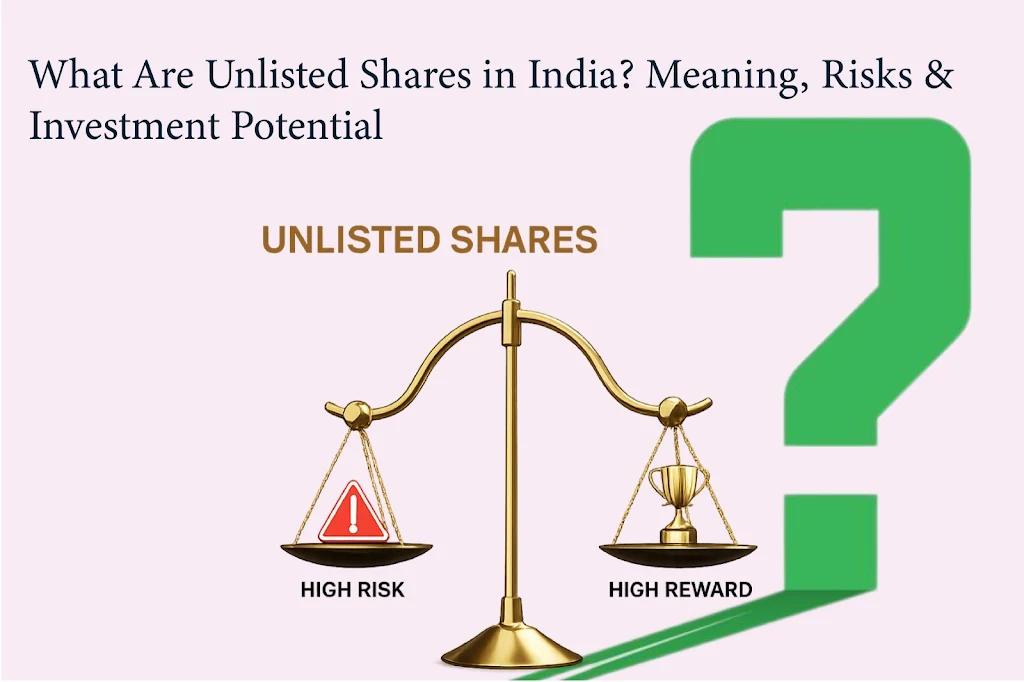
Unlisted shares in India refer to equity shares of companies that are not traded on recognized stock exchanges like NSE or BSE. These shares belong to companies that are privately held or are yet to go public through an Initial Public Offering (IPO).
Investors consider unlisted shares to gain early exposure to companies before they become publicly listed. Understanding how these shares work, along with their characteristics and investment potential, is essential before participating in this segment.
Unlisted shares are securities of companies that are not listed on stock exchanges. Unlike publicly traded stocks, these shares are bought and sold through private transactions.
Such companies may include:
Since these shares are not traded on exchanges, their pricing and liquidity are different from listed stocks.
Unlisted shares can broadly be categorized based on the stage of the company:
1. Pre-IPO Shares
Shares of companies that are expected to go public in the future.
2. Private Company Shares
Shares of companies that are not planning an IPO in the near term.
3. Delisted Shares
Shares of companies that were previously listed but have been removed from stock exchanges.
Each category has different characteristics in terms of liquidity, valuation, and investment horizon.
Unlisted shares are typically traded through:
Once a transaction is completed, shares are transferred to the investor’s demat account.
Unlike listed stocks:
This makes it important for investors to understand the process before participating.
Pricing of unlisted shares is influenced by multiple factors:
Since there is no centralized exchange, prices may vary across transactions. Investors should evaluate valuation carefully before investing.
Unlisted shares offer a different investment opportunity compared to traditional listed stocks.
Some potential advantages include:
However, returns depend on company performance, market conditions, and successful listing.
Before investing in unlisted shares, investors should evaluate:
A structured evaluation approach helps in making informed decisions.
Unlisted shares have certain characteristics that investors should be aware of:
Understanding these aspects is important for setting realistic expectations.
Before investing in unlisted shares, consider the following:
This checklist can help investors evaluate opportunities more effectively.
Supremus Angel enables access to verified unlisted shares and Pre-IPO opportunities in India. Each opportunity is evaluated based on key parameters such as financial transparency, governance standards, and market positioning.
Investors receive structured information and a streamlined process for participating in unlisted share transactions through direct demat transfers.
What are unlisted shares in India?
Unlisted shares are shares of companies that are not listed on stock exchanges and are traded privately.
Are unlisted shares legal in India?
Yes, buying and selling unlisted shares is legal when done through proper channels and compliant processes.
How can I buy unlisted shares in India?
Unlisted shares can be purchased through intermediaries or platforms that facilitate private market transactions.
Do unlisted shares get listed later?
Some unlisted companies go public through IPOs, but not all companies list on stock exchanges.
Are unlisted shares suitable for all investors?
These investments require careful evaluation and are generally considered by investors with a longer investment horizon.
Unlisted shares in India represent an alternative investment avenue that allows investors to participate in companies before they become publicly listed. While they offer access to early-stage opportunities, they require careful evaluation, understanding of pricing, and awareness of investment characteristics.
By focusing on company fundamentals, governance, and long-term potential, investors can make more informed decisions in the unlisted share market.
